Pages

Monday, 7 September 2026

Gauri Vrat - Five Days Fasting Festival For Girls And Ladies In Gujarat In Memory of The Eternal Love of Shiva-Paarvati


Aashaadhh - The Rainy Month of Festivals

The month of Aashaadhh, as per the Hindu (Lunar) calendar, falling in the rainy season, during the months of June-July, brings along festivals and celebrations.

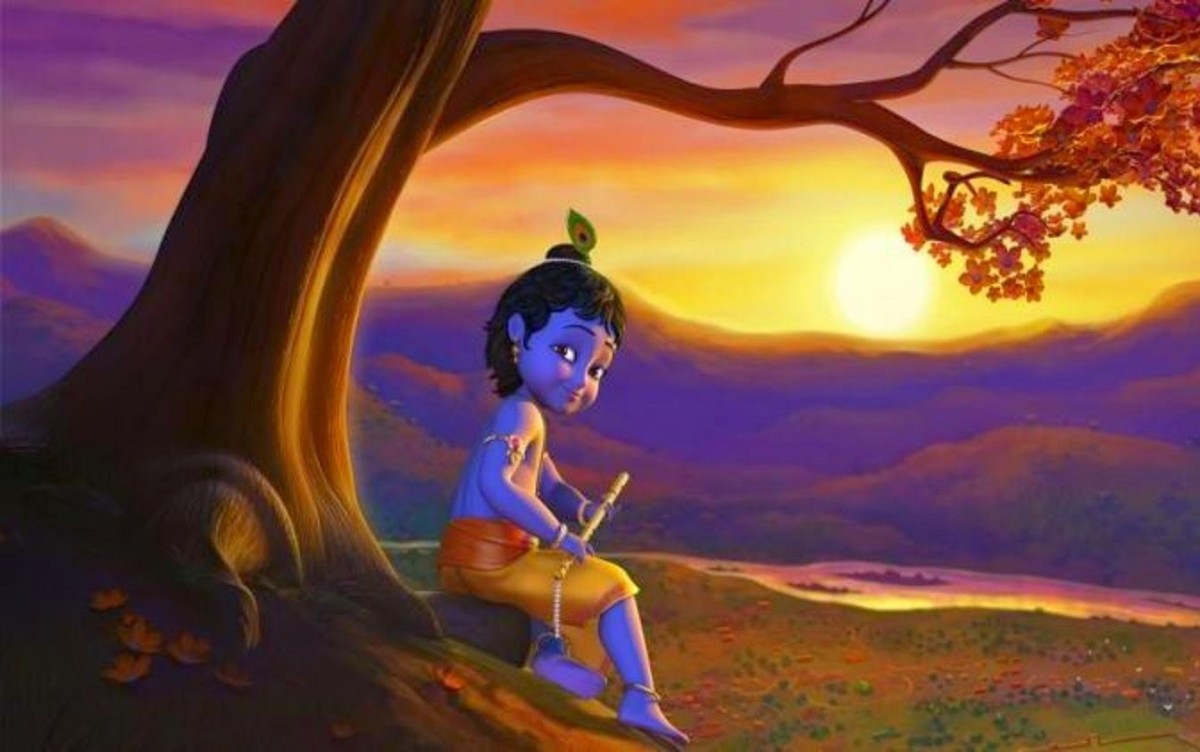
On the second day of the Shukla Paksha (the fortnight from Amaavasya - New Moon to Poornima - Full Moon), called Dwitiya in Sanskrit and other Indian languages, or Dooj in Hindi (Beej in Gujarati), the Chariot Festival, called Ratha Yaatraa is celebrated. The idols of Shree Krishna as Lord Jagannath, along with those of sister Subhadra and elder brother Balaram or Balabhadra from the famous Jagannath Temple of Puri in Odisha are taken for a ride around the city in specially decorated chariots on this day. The Deities visit the Temples of their maternal relatives and return to their majestic Abode at the Jagannath Temple. Special Pooja and rituals take place and hymns and other artistic offerings are presented to Lord Jagannath with great enthusiasm and devotion, filling the atmosphere with joy, festivities and devotion. The traditions of these celebrations have spread beyond Odisha, into different places all across India and abroad, like Ahmedabad, Vadodara, Kolkata, Dharmai (Bangladesh), different parts of the USA and so on.

Jagannath Rath Yatra ....

Gauri Vrat

When is Gauri Vrat celebrated ?

Eleven days after the Ratha Yaatraa Festival, on the Trayodashi or thirteenth day of the Shukla Paksha of the same month, a Five Days Fasting Festival called the Gauri Vrat is celebrated in Gujarat, in memory of the Eternal Love of Lord Shiva and Goddess Paarvati.

Little girls, sometimes as young as four or five years old girls very enthusiastically observe fasts for five days, perform pooja and enjoy the celebrations especially meant for them during the festival.


The Eternal Love Story of Shiva and Paarvati ....

Gauri or Gaur Maa ....

Gauri or Gaur Maa - another name of Maa Paarvati - is worshipped as Jawaaraa or saplings of (seven) grains grown in a small bamboo basket. The seven grains are - Paddy, Wheat, Barley, Sorghum, Bean, Pigeon Pea and Sesame. These grains, considered as auspicious, are sown in a tiny bamboo basket about seven days before the commencement of the festival in cow-dung manure and nurtured to grow into beautiful saplings.

How is Gaur Maa worshipped ?

The Gaur Maa is worshipped everyday in the morning and evening by lighting lamps and incense sticks and offering Kumkum, Abir, Gulaal, Turmeric Powder, flowers and other auspicious pooja material, singing songs and hymns while performing the Pooja and offering Prasaad.

Gauri or Gaur Maa ....

How are the fasts observed ?

During the Gauri Vrat the girls observe fasts, eating selected food, which does not contain salt.

Fruits, pure juices, dry fruits, milk and curd preparations, such as Shreekhand and other sweets can be taken.

During the first four days, once in a day, something prepared from wheat can be taken, such as roti or puri or pancakes or bhajia. Specially during these days, a salty green leafy vegetable is available which is allowed to be eaten along with the wheat meal.

On the last day, no wheat item or salty vegetable is allowed - only fruits and milk can be taken.

Little Girls enjoying their Prasaad with Gaur Maa ....

Jaagaran on the Fifth Day ....

On the last and fifth day, there is Jaagaran during night, which means the girls remain awake for the whole night. They play, sing and dance, go to nearby places like gardens, temples, etc.

Now a days, watching movies has become popular.

Video games, mobile games are also available to spend time.

Family members also remain awake with the girls and it turns out to be a great fun and merriment time.


Celebrations ....

Gauri Vrat is a festival of happiness. The girls decorate their hands with Mehndi, wear colourful clothes and jewelry, sing and dance, and play games, go to parks and gardens and so on ....

During Gauri Vrat days, special arrangements are made in the public places to ensure that the girls get to enjoy without hassles.

In gardens and parks and cinema halls, only girls and ladies are allowed.

Gardens, cinema halls, and other such places of entertainment and infotainment are kept open till late hours and all through the night on the Jaagaran day for them to enjoy without restrictions.

Special arrangements for free fruits, dry fruits, juices and sweets are made by various institutions and reputed families in the village / town / localities for the girls observing the Gauri Vrat fasts.

My mother tells about and sings special Garba and Folk songs on Gaur Maa. Now a days, we don't get to hear those songs ....

I could locate the video of an old song - Gaur Maa No Var Kesariyo Ne .... from the famous Gujarati film Sonbai Nee Chundadee, showing celebrations of Gauri Vrat in a village ....

Gaur Maa No Var Kesariyo ....


Singing and dancing ....

Bidding Farewell to Gaur Maa ....

The day after the Jaagaran day, that is on the sixth day, the Gaur Maa is given a festive farewell. The final pooja is performed. Traditionally, a group of all girls in a village or locality and their family members join together to form a farewell procession for their Gaur Maa to be taken to the nearby water source, like lake or river, with singing, dancing and merriments. Finally, in a ceremony called Visarjan, the Gaur Maa is reverentially immersed in the lake or river water.

After returning home, the girls are served special delicacies of their choice to open their fasts and return back to usual routine.


Gauri Pooja ....

Gauri Vrat Udyaapan Ceremony ....

The Gauri Vrat is done for minimum five and maximum any further odd number of years.

On the last year of the Gauri Vrat, special Udyaapan Ceremony (ritualistic ending of the Vrat) is performed, in which at least five or more odd number of girls doing Gauri Vrat are invited for opening their fasts. The girls are served delicious feast of their choice and given gifts as memories.


The Divine Couple - Shiva and Paarvati ....

The Jayaa Paarvati Vrat after Gauri Vrat ....

Grown up girls who are through with their Gauri Vrat, having performed the Udyaapan Ceremony, observe the Jayaa Paarvati Vrat.

The procedure is same, except that the Gaur Maa or Jawaaraa - the seven grain saplings are not grown.

The girls go every morning to the nearby Shiva Temple and worship Shiva and Paarvati there. They hear the Kathaa or the Tale of the Divine Love of Shiva and Paarvati at the temple.

After minimum five years or further any number of odd years, such as seven or nine or eleven years, the Udyaapan Ceremony of Jayaa Paarvati Vrat is celebrated in the same way as it is done for the Gauri Vrat.

Significance of Gauri Vrat ....

In the Hindu traditions, fasts are observed to develop the quality called Samyam (most closely translated to English as tolerance or patience or a combination of both).

The girls, and along with them their families get to learn family and social values through the example of Shiva and Paarvati. The Shiva family is an ideal family. Shiva is known as Mahadev - the God of Gods. Shiva is the first Guru - the Aadi Guru and the first Yogi - the Aadi Yogi. Paarvati is the manifestation of Aadyashakti - Mother of the Universe. Their elder son Kartikeya is the commander of the Army of Gods and younger son Ganesha is the God of Knowledge and Wisdom, the God of Beginnings, Leadership and Collectivity, the Remover of obstacles.

It is believed that the girls are blessed with success in their future family lives in the form of a life-partner of their dreams and choice and a happy marriage by observing the Gauri Vrat and the Jayaa Paarvati Vrat.


The Shiva Family ....

Guru Poornima ....

During Gauri Vrat, the third day is the Full Moon day - the Poornima - which is celebrated as Guru Poornima - a festival for expressing gratitude, reverence and devotion to the Guru - the (Spiritual) Mentor or Guide or Teacher, who imparts knowledge and dispels darkness of ignorance.


Education : A Poem Based On An Old Inspiring Story


Education

Long, long ago

In a Gurukul,

A dumb student, Varadraj,

Struggled in vain

To study and learn,

But, always,

His laziness and foolishness won

And he became and remained

An object of fun.

His classmates surpassed him,

Completed their studies

And left for home,

Leaving him behind,

Ashamed and alone ….

Gurujee’s perseverance,

Patience and compassion

Also gave way,

One day

And with heavy heart

And kind words,

Varadraj was told

To leave for home ….


On his way back,

Dejected, despair-loaded Varadraj

Stopped by a well

To quench thirst

And his eyes fell

On the eroded stone wall

Of the well.

He wondered,

If a rope can erode,

Leaving pits and marks

On stony well wall

Can hard-work not carve,

Can hard-work not enliven

My stone-dumb brain ?


He went back

And told this to Gurujee,

Who gladly

Gave him

One more chance,

Not in vain, again,

For he worked hard

And excelled ….

Gurujee’s kind support

And purity of his pupil’s

Intentions as well as Efforts

Fetched desired results.


- Vanita Thakkar (24.08.2009)

During my tenure in Academics - as an Assistant Professor and later, as an Associate Professor in Mechanical Engineering, while teaching heavy / complex subjects like Heat Transfer, I used to inspire my students to work hard and to be self-confident by narrating this story, assuring them that they are far better than Varadraj - the dumb student in the story ....

I had this story in my Hindi Prose lessons in the fifth standard and it had inspired me a lot as a student .... At the end of the story was a small two line verse, which is called Dohaa - "Karat Karat Abhyaas Ke, Jadamati Hot Sujaan, Rasaree Aavat Jaat Te, Sil Par Parat Nisaan" .... given in the picture ....


One day, I thought it could be a penned into a good poem and wrote this poem ....

Sunday, 6 September 2026

The Award : A Short Story

Vipraa came to know that Dr. Yashwant Patel – the well-known, veteran Gujarati writer-thinker-philosopher had received one of the highest Civilian Awards of the country. Wow !! Great !! Vipraa was acquainted to Dr. Patel. She had attended one of his lectures, more than three decades back and later got the opportunity to meet him. He was a renowned orator as well and Vipraa – a second year college student then, was impressed by his ability to hold the attention of his audience. How she had wished her professors would have at least a few percentage of that ability !! ….

The trail of other memories followed and she recalled her interactions with the renowned, as also controversial personality …. Yashwantbhai (that is what Dr. Yashwant Patel was addressed as) spoke with jesting nonchalance, with traces of pride in it – on all the opposition he was facing – all the letters that he was receiving against his writings ….

A Queer Comment ....

“Chhaayaa looks like a shelly cow ….” Yashwantbhai had commented about a common acquaintance, hearing which Vipraa was taken a back. The phrase “shelly cow” (called “vasuki gayeli gaay” in Gujarati) was new to Vipraa, but she could grasp the feel of what it meant. Later, she found out that it apparently means an old cow, usually in poor condition and found “useless” as she cannot be milked …. What Yashwantbhai said about Chhaayaa did not sound good at all. Not that Vipraa and Chhaayaa were great friends. Perhaps Yashwantbhai could know that they are too different to be friends. However, for some time, Vipraa and Chhaayaa were friends – if not good friends. At least that is what Vipraa thought. Chhaayaa was a professional and Vipraa was a college student then – more than three decades ago. They knew each other and had worked together for a couple of months, in a Youth Organization, to which Yashwantbhai was the mentor. Yashwantbhai, in his fifties then, enjoyed good influence on the founder of the Youth Organization, Rajiv, though behind his back, Rajiv openly and clearly expressed his reservations on Yashwantbhai’s “limitations” that Vipraa found difficult to understand. Rajiv was under some stress, perhaps, to maintain his hold on his group members. There were questions being raised on the vision and objectives as well as on the ways of functioning of the organization. Vipraa, a teenager at that time, could sense that there was something wrong somewhere and tried to see if there could be a change for good …. It couldn’t work. Perhaps she was too small, too simple, too naive …. Whatever !! Vipraa was sure of what she thought was right and good for herself. She distanced herself from the organization and its hassles, wishing and praying for the good of All …. Chhaayaa was close to Rajiv and perhaps had gone closer than what could be expected of a decent relationship …. Vipraa wondered as to how that was possible ??!! And if they are so close, why do they not get married ??!! ….

I am an anti-marriage person ….

And Yashwantbhai – he is known for his views against marriage. He himself told Vipraa that he is against marriage – “I am an anti-marriage person ….” Much later, Vipraa came to know that he had even initiated a campaign against marriage … !! ?? What for ? He himself is happily married !! His kids also got married later !! And as far as can be known – they are quite happy !! Still he spoke with such confidence and pride that he is anti-marriage – against marriage !! Why ??!! This is where Vipraa could not agree with Yashwantbhai. She never spoke to him about it directly. She treated Yashwantbhai with great respect – as a good writer and orator and an elderly renowned personality ….

How and why does such a great thinker and writer take pride in speaking against, even running a campaign against marriage – a relationship that is the basis of a healthy family life in a healthy, strong society …. !!??

Did he not give a thought to the option of understanding and talking about the essence of, the importance of, the dignity of that relationship …. Does he not owe anything of his achievements to his parents and their relationship; to his family life, to his marriage and to his wife …. ??!! ….

Before turning against any tradition, especially publicly, is it not wise to understand what it stands for, what are the misconceptions prevailing about it and how they can be overcome, to ensure that the essential auspicious thought and conviction behind its evolution are upheld …. ??!!

In a lighter vein, Vipraa observed that the fashion of running away from marriage and blaming marriage has never got old among men for ages !!

Feminism .... ??!!

Some other aspects of Yashwantbhai’s views also puzzled Vipraa. While speaking to Vipraa during their telephonic conversations on the Raamaayana and his own writings on the great scripture, Yashwantbhai more than once emphasized on focusing on the characters of Taadakaa and Shoorpanakhaa – the two Rakshashis or demonesses – saying they turned bad due to the atrocities they faced and due to curses of sages …. Vipraa felt puzzled when she heard that for the first time and more so on its repetition for the second time …. Then, the next time, she gave her reply to the advice – “It is better to focus on Shabari.” (In Raamaayana, Shabari is a tribal lady, an ardent devotee of Lord Raama and a disciple of the great Sage Matanga, who tells Lord Raama about Hanumanji and where he can be located).

Yashwantbhai had written in one of his articles that Shoorpanakhaa had done nothing wrong by flirting with Raama and Laxamana and that she should not have been punished for doing so …. was she punished for “flirting” with Raama and Lakshamana or for trying to harm Sitaa ? Vipraa had asked about this, but she did not get any reply ….

Well, is such a stance – of favouring vamp-like characters – called feminism ? Or is that being kind to ladies ? What type of feminism is it – women have the right to be wrong and bad ??!! ….


Vipraa found Yashwantbhai cautioning her against various evils prevailing in the society, especially against women, many of which were undoubtedly genuine – but he never talked of solutions, or efforts / attempts being made towards seeking the right solutions or attempts being made towards overcoming them. He sounded neither optimistic nor solution-oriented, in spite of his known associations with social works and social reforms. Was he so much taken to the awe of magnitude and complexities of the problems that he had lost sight and track of solutions …. ?

In a couple of bouts of credulity that Vipraa had witnessed during his lecture sessions, Yashwantbhai showed tendencies of trusting and committing on behalf of those who were not true enough to him – from what they spoke of him behind his back. And perhaps, as a lame excuse to the consequences of such blunders, he sometimes posed off that he enjoys being misunderstood …. Vipraa wondered if Yashwantbhai could see that his gracious servings of hot and sour spicy grey stuff to fans suffering from hyper acidity could be harmful to their health as well as his reputation.

In view of all this, Vipraa had her own doubts and concerns about how much and what type of justice Yashwantbhai was doing to all the appreciation, the respect and name he was commending in the society ….

Life takes its own course and amidst challenges of striking a balance between circumstances and priorities, acquaintance with Yashwantbhai turned into memories of appreciation and lessons from his lectures and writings and some interactions with him.

And of course, there can be no denying to the fact that Yashwantbhai speaks and writes well on a good range of topics – that include philosophy, religion, politics, nature and so on, with some traces of spiritualism …. and is much appreciated ….

A beautiful quote from Khalil Gibran brought Vipraa back to her present :

“I have learned silence from the talkative, toleration from the intolerant, and kindness from the unkind; yet strange, I am ungrateful to these teachers.”

With prayers in her heart, Vipraa got back to her work.


- Vanita Thakkar (26th August, 2020)

© 2020 Vanita Thakkar

Sunday, 7 June 2026

Dusk - Poem


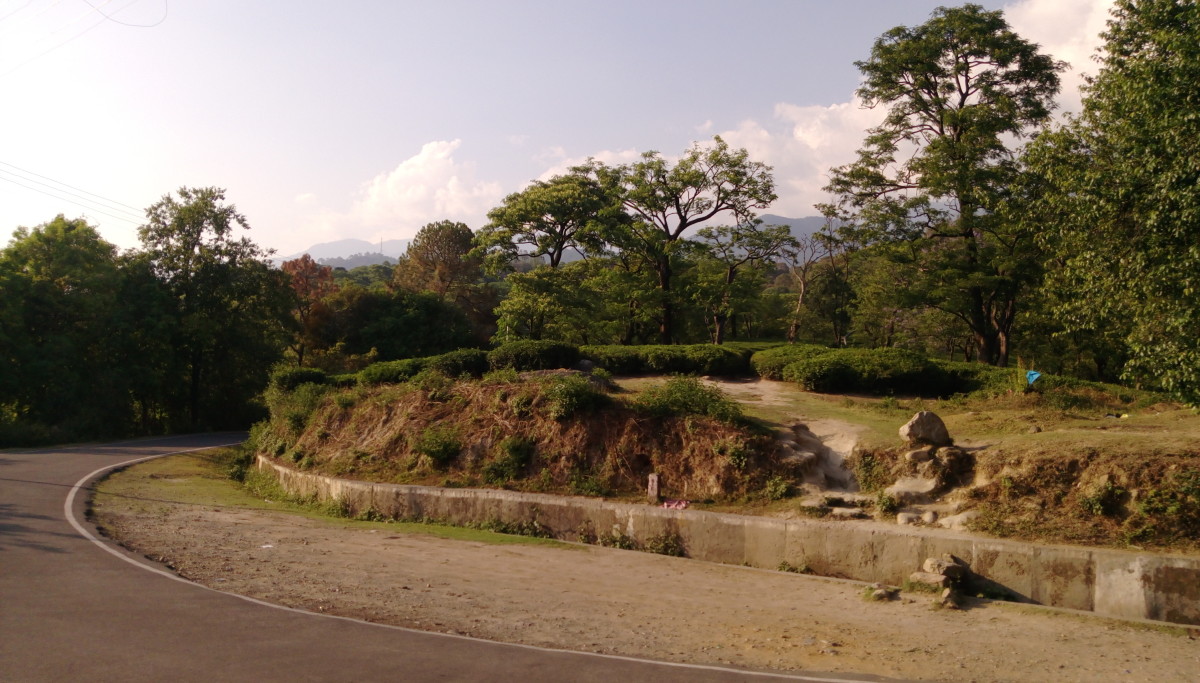
Dusk - at Dharmashala, Himachal Pradesh, India .... by Vanita Thakkar (May, 2017)

Dusk


The western horizon is turning crimson,

The shadows of trees are beginning to lengthen.

The lotus folds in, trapping the bee

And to their nest, the birds are returning.

The sunshine is gradually drifting away,

The humming breeze sings of the departure of the day.

Here ends another day's work !

And countless feet turn homeward,

To be back before the lamps are lit

And the moon peeps in to greet,

For, soon in, the night will crawl

To wrap the land in her dark shawl,

Under whose folds, we shall creep

Into the world of dreams, in our sleep.

All the tiredness may it absorb !

While the Sun goes to light up the other end of our Orb.


- Vanita Thakkar (28.11.1989)


Sunset - at Dharmashala, Himachal Pradesh, India .... by Vanita Thakkar (May, 2017)

© 1989 Vanita Thakkar

My Life - Poem .... Love Life, Love Yourself ...


No one can live my life for me,

Nor can I live someone else's life ....

Love Life, Love Yourself ....

- Vanita Thakkar


My Life


The limited measures

Of my perception

Try to fathom,

To quantify and define

My possibilities,

My limitlessness.


How much?

How good?

How bad? ....


Where do I stand? ….


The urge for Uniqueness

And craving for Oneness –

Are they antonymous

Or naturally co-existent? ….

Are they there?


Uncommon or common,

Liked or disliked,

Nobody can live

My life for me.


Vanita Thakkar (written in 2008-09)


© 2020 Vanita Thakkar

Expectations - Poem .... With Reflections on - Is It Possible to Be Devoid of Expectations ?! How to Balance Them ?!


.... Everything does not happen just as we expect .... Is it possible to be devoid of expectations ??!!


Expectations


Time goes on and on.

The future, absolutely unknown.

And ambitious as he is,

Man always expects bliss.


Joy, to the present they nurture,

These lovely dreams of future.

But, alas ! It is a fact that

Everything does not happen just as we expect.


- Vanita Thakkar (29.06.1987)


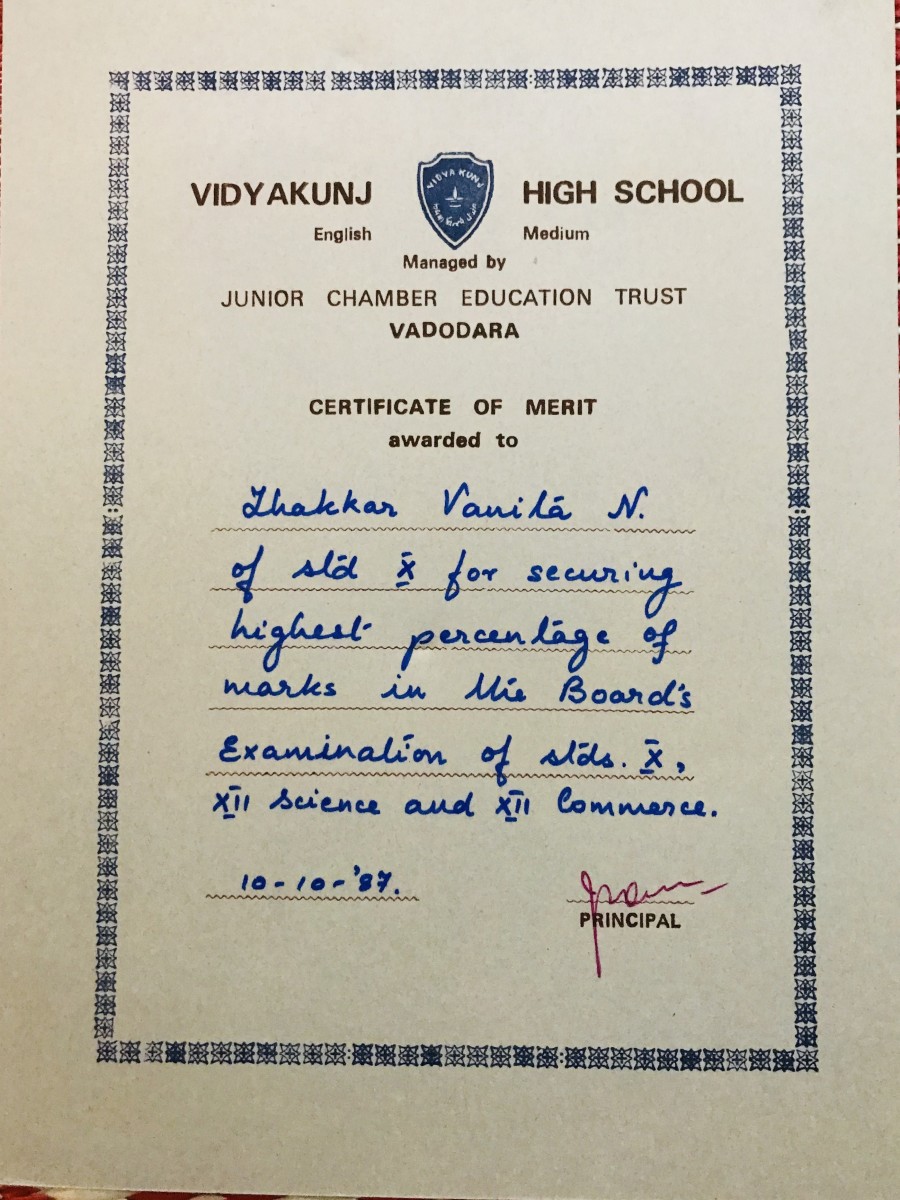
29th June, 1987 was the day on which my Secondary School Board Examination (commonly known as Class X Board Examination) results were declared. I had topped in my school - among all those who had appeared for Board Examinations : Secondary as well as Higher Secondary, but, had scored lesser than expected. My scoring percentage had never gone below 80% throughout my schooling and I saw myself scoring an unexpectedly low 76% and was dejected. We (my teachers, family, friends, relatives, well-wishers .... and I) had expected much higher marks and percentage.

I was a student of Gujarat Secondary Education Board (GSEB) and for Standard / Grade X, the Examinations are conducted centrally by the respective state education boards, as per the prevailing education system in India. I had been a student of Central Board (managed by the Central Government Education Department) till the previous year, that is, till my 9th standard / grade. In the Central Board schools, there is an internal board examination in the 9th standard, which means the question papers for the examinations are from the Central Board - sent to schools all over India, but the assessment takes place locally. After completing my 9th standard, my parents decided to shift me to a state board school as that would ensure easier and better scopes for university admissions in Gujarat. There are limited seats for Central Board students in the state run universities and higher studies in Vadodara was a top preference for both, my brother and me.

Education - with respect to contents, style as well as atmosphere - in state board schools was very different. Taking extra coaching in the form of tuitions outside the school was so common that I was the only student in my class - both sections - who had not opted for any external coaching. There were optional subjects to be selected - I opted for Hindi instead of my mother-tongue Gujarati since I had never had any formal education in Gujarati. There was a choice of two out of three between Sanskrit, Special Geography and Typewriting and I wanted to take Sanskrit and Special Geography, but both classes were going on simultaneously. So, I took Sanskrit and Typewriting. For typewriting, we had to go to a separate affiliated institute for a session of one hour after our school hours, every working day. I had scored well and highest in both of those subjects. The problem was in Science, Mathematics and English. I was complimented (and unknowingly consoled) that scoring this good percentage in English medium was commendable. In Gujarat State Board, English medium results were always lower and poorer than Gujarati medium results. The common reason that I got to hear from most people was that the English medium paper assessment was too difficult for the available qualified staff. Some people even told me that my cursive (and pretty good) handwriting (that was much loved and appreciated by all, especially my teachers - so far) must have been too difficult to read (that is something very disappointing) !!

This poem and my parents were the only ones who knew how disappointed I had felt at my result. No, no, there was one more person (Ha, Ha ....) : My father had accompanied me to my school for collecting my result. I tried and managed to remain cool while accepting all the compliments and Pappa was cheering me up on our way back as we boarded an auto rickshaw. He was happy and wanted to celebrate. He asked the auto rickshaw driver to stop near a sweet shop and got down to get the sweets. I realized how sullen my face had turned, when a genuinely concerned auto rickshaw driver asked me, "Beta (an affectionate way of addressing a kid or younger one), have you failed ?" Oh God !! .... "No", I replied, "I have passed ...." as I saw my smiling father return back with a packet of sweets and board the auto rickshaw ....

I had written this poem in the quietness of the evening that day, sitting all by myself in our little backyard and decided that I will score higher - at least, not let my results go further down - in the two years of schooling left before me. I could manage that and I topped in the next two years as well, even though in my Higher Secondary Examination also, I scored much lesser than expected in one of the main subjects - Chemistry and could not cross the 80% mark.

My certificates for the SSCE ...


Further Reflections on Expectations ....

Expectations are often mentioned at several places - in philosophy, in religion, in relations ....

My experience in the above mentioned incident was with reference to expectations of results of my efforts in studies. Till the above incident took place, my results used to be better than what I would expect. I would estimate how much I was likely to score, and I would never get lesser than what I would expect. Also, here, even though the results were not up to the expectations, and perhaps up to the caliber, they were not altogether bad. My friends would not understand my dismay, which would surface out spontaneously, as they had a very different background. And I was scoring more than them !! So, some even looked upon it as my "hypocrisy" !!

The study material that we got in State Board schools was also not as good as I was used to. Text books were most disappointing .... Making notes, going to the library, reading reference books .... was something that did not appeal to most of my new class mates. In Secondary School, I was the only student who went to the library regularly - much to the joy of my teachers and librarian. In Higher Secondary, our English Medium library was never found open !! And perhaps I was the one who was most disappointed about it .... But, this was not all. Studies went on in their own course. I was in Science stream and there were hardly ten or eleven girls in our class. Our group of seven girls was most amazing. We had had some most memorable wonderful times together and the seven of us are still in touch ....

People try to philosophize expectations by saying - "All troubles are due to expectations .... There should be no expectations ...."

How true is it ? Is it not OK to expect a human being to behave like a human being - as the most beautiful of creations ? And is it really possible to stop expecting ? Is life so isolated ? Are our ethical rulings, religious preaching and legal systems not based on expectations - to maintain order and peace in human society ?

Expecting someone to stop expecting is in itself an expectation !! (Ha, Ha ....)

Perhaps we forget a very important fact of Life - there is no independence in physical, emotional and social ecosystems. There is interdependence, which has to be respectfully and lovingly enjoyed. And that leads to "independence" - a word that belongs to the world of spiritualism.

The problem, perhaps, is not related to expectations being there or not, as expectations cannot be ruled out. They cannot be non-existent. However, a balance of expectations has to be established and maintained in our relationships and dealings everywhere - in personal, professional and social lives as well as in our relationships and dealings with our surroundings, our environment, our ecosystem and our beautiful universe, as a whole. This is a collective responsibility, wherein everyone, every individual plays his / her significant role.

Some interesting and thought-provoking quotes on - Expectations ....


From HubPages .... Published on 01st December, 2020.

© 2020 Vanita Thakkar
 

Gauri Vrat - Five Days Fasting Festival For Girls And Ladies In Gujarat In Memory of The Eternal Love of Shiva-Paarvati

  Aashaadhh - The Rainy Month of Festivals The month of Aashaadhh , as per the Hindu (Lunar) calendar, falling in the rainy season, during t...

Explore