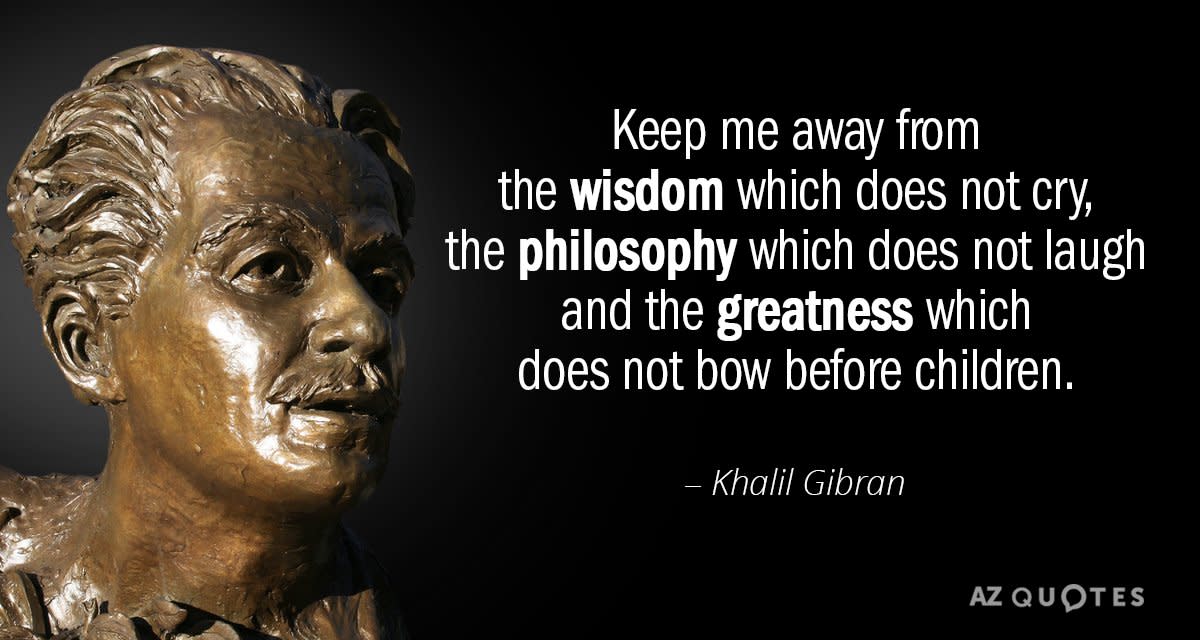
Lata Mangeshkar was personified sweetest version of the Sounds of Divinity, a voice that conveyed with a profoundness far beyond the scope of any words to describe. In response to an urge that has been lingering within for quite a long time now, I wrote this article about her presence in my life ...
The one and only - Lata Mangeshkar ....
Lata Mangeshkar (28th September, 1929 to 06th February, 2022) - is not just a name known to every music lover and every student of Music. She was personified sweetest version of the Sounds of Divinity, a voice that conveyed with a profoundness far beyond the scope of any words to describe. Lata Mangeshkar resides in the hearts of millions and millions of Indian households and music lovers all across the globe, even though she left her earthly existence a little more than a year ago, on 06th February, 2022.
Much is available on Lata Mangeshkar online as well as offline - to know about her life, her singing and songs, her works .... her legendary personality.
In response to an urge that has been lingering and lingering within for quite a long time now, I would like to write in this article about her presence in my life - as the greatest of legendary singers who inspired and influenced the music lover and singer in me and my entire being.
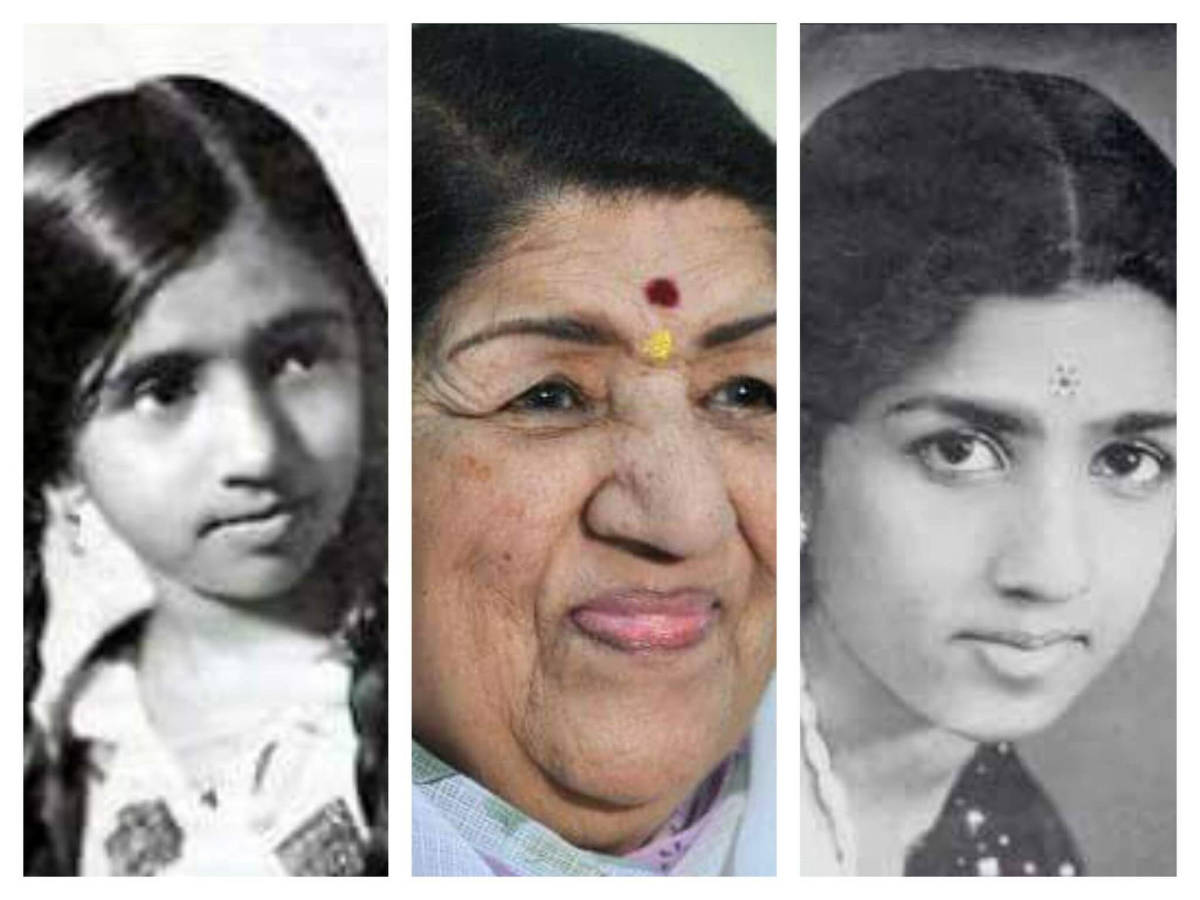
Lata Mangeshkar - the little girl, young lady and veteran ....
My First Music Lessons ....
Lata Mangeshkar was the first singer I remember having heard.
I used to listen to my father singing his daily prayers and my mother singing hymns every morning at home. There were :
I used to sing them, especially with my father.
As a five year old girl who was yet to start going to school at Kendriya Vidyalaya, Bongaigaon, Assam, I was introduced to the Radio and the songs being played in it. Lata Mangeshkar was one of the most frequently heard names in the answers to the queries popping out of my aroused curiosity. There were unanswered puzzles as well, like the one described in my poem - Motherhood .... Needless to say, I was much drawn to Lata Mangeshkar's singing. The mind of the little kid in me was exploring Life in her songs and music and even beyond them, in the realms they opened up in my innocent curiosity, imagination and experiences ....
The first film song I remember having heard is still one of my most favourite songs, the title song of the film - Raajkumar .... Aajaa Aayee Bahaar Dil Hai Bekaraar ...., most beautifully sung by Lata Mangeshkar .... It was broadcast almost everyday afternoon on All India Radio, Guwahati. I listened to it with great pleasure and admiration during my lunch break at home. Our school was at a walking distance and my brother and I used to come home for lunch. I started singing along, sometimes, even while eating, to the great annoyance of my brother (ha, ha ....).
These were my first music lessons.
Video link to the song - Aajaa Aai Bahaar .... (Singer : Lata Mangeshkar)
My Father - Music Lover, Singer, Poet, Composer ....
My Grandfather's Legacy
My grandfather - Late Shree Dalsukhbhai Khushalbhai Thakkar - owned and managed a small business in the sub-divisional town - Amod - in the Bharuch District of Gujarat. It is about 62 km to the South-West of Vadodara. Our family originally belongs to Sarsa ( pronounced as Saarasaa), a village in the Anand District, about 35 km to the North-West of Vadodara.
My grandfather was a well-known Bhajanik (Bhajan singer) of our region. He and his troop of Bhajan singers and musicians regularly attended and participated in the music sessions conducted by Pandit Omkarnath Thakur at Bharuch. They also had regular Bhajan sessions every weekend which my father describes as truly engrossing and elevating. My grandfather, though formally untrained and not a professional singer, had a very sound knowledge of Indian classical music and its intricacies and he was much respected for this.
My father was drawn and inspired towards music by his father's love for music. However, my Grandpa discouraged Pappa's pursuit of music, in the interests of a better career option for him. Pappa went on to become a Mechanical Engineer, but his love for music remained and bloomed. As a college student, he wrote and composed several songs. He would sing them before my Grandpa on his visits to Amod. Grandpa would immediately tell him about the Raaga / Raagaanga and give his expert comments and elaborations / advice.
Pappa's Music Training ....
During our stay in Bongaigaon, Assam, Pappa decided to take formal training in music. He came across a Bengali gentleman who would teach him basics of music and Ravindra Sangeet. He brought a harmonium for himself, which is still there, more than forty-five years old. I use it to teach music to my students.
I would sit with my father as he practised music. One evening, as we sat in the living room, he composed an English song for me - Once I was sleeping, I had a dream .... He has written and composed three such songs in English for me, which I have loved presenting before my audiences. He was playing on the harmonium and singing it to me. Amused and happy, I was listening to him, watching him play and singing along .... Just then, he had to go inside for some work. I crossed over to the other side of the harmonium and started playing what I has seen him play. Pappa heard the sound of harmonium and hurried back to the living room. He was so delightfully surprised to see me play !! He asked me to play it again. Yes !! I still remember his joy and pride !!
My Music Lessons Begin at Bongaigaon, Assam .... The Role of Radio and Tape Recorder In Continued Learning During Scattered Schooling ....
Music Lessons in Bongaigaon ....
Pappa decided that I should be given training in music. And my formal music lessons started. I learnt singing, playing on harmonium and kathak at the club house of our BRPL Township for some months, till our teacher stopped coming.
At school, I used to perform regularly in all programmes as our music teacher, Mrs. Maya Saha was very fond of my voice and my singing.
During the last year of our stay at BRPL, in 1981-82, when I was nine years old, I learnt playing on Hawaiian Guitar from one of my Bengali neighbours, Mrs. Ruma Mitra. She was a musical genius. She had a very sweet, melodious voice and could play on several musical instruments, including harmonium, guitar and tabla. She was extremely fond of me and loved my singing and my talking to her in Bengali. She taught me some songs and took me for stage performances.
Radio and Tape Recorder - Gave Uninterrupted Music Lessons ....
During those days, in the late 1970s, tape recorder was becoming popular. We got one. Recorded cassettes were not available easily. So, recording sessions on blank cassettes from disc records in noise-free atmosphere were favourite weekend projects for Pappa and me. We had made a great collection of a large number of songs in Gujarati, Hindi, Bengali, Assamese, English and so on, which were proudly played in social gatherings and parties.
Due to Pappa's transferable job, throughout my scattered schooling, my formal music lessons were intermittent. But learning on radio and for some time, till we had it, on our tape recorder, continued uninterrupted. And here, the teachers were - Lata Mangeshkar - most favourite always, Asha Bhosale, Geeta Dutt, Mohammad Rafi, Kishor Kumar, Mukesh and so on .... This list is a long one.
My obsession for radio was known among family and friends. Radio was my constant companion throughout the day - whether I was solving / practicing mathematics problems or was helping mummy with routine chores or even while I was going to sleep. My brother would be annoyed to spot me sleeping with the radio on, which happened pretty more often than he could tolerate (ha, ha ....). My radio would accompany me even in the bathroom (ha, ha ....). My good academic performance was probably a great shield for my madness for music.
Opportunities ....
My talent got discovered at every place we went to, in different parts of India - Assam, Gujarat, Andhra Pradesh, Bihar, Tamil Nadu and so on.
I kept learning songs from different regions.
I got opportunities to perform on All India Radio at Vishakhapatnam. I also performed in many a prestigious and important programmes like the Navy Mela Programme at Vishakhapatnam in 1983-84, and at various local, zonal, regional, state and national level events and at a couple of international ones as well, at different places across the country during my school days.
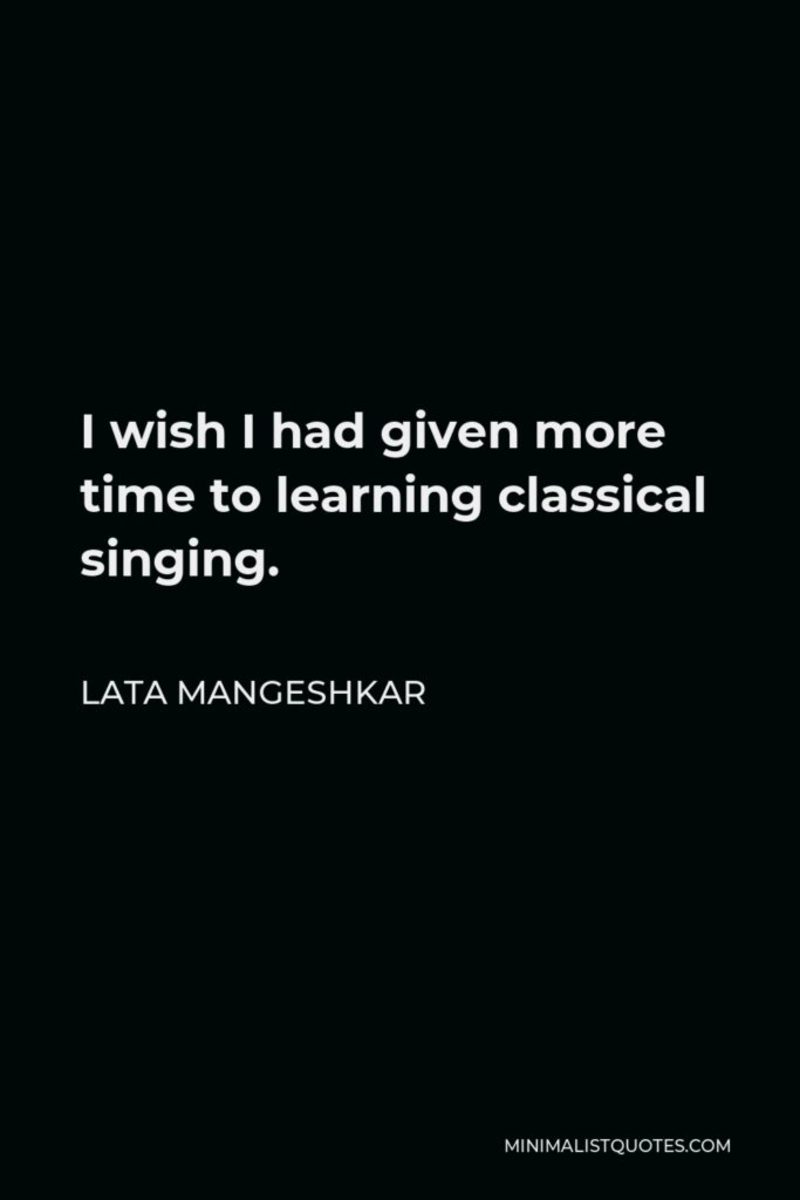
However, I wanted to get properly trained in music, in classical music, which could not happen till I was in school. I was a science student and was supposed to fully concentrate on my higher secondary studies.
So, I had decided to start my classical music training after finishing my schooling.
Learning Music and Experiences of Real World Complexities ....
I had understood that Music is essential to my existence.
My family advised me that I should pursue a full-fledged career in Music, totally devoted to Music. I was fully in agreement with the ideal as well as practical genuineness of their advice. However, that could not happen.
I was denied Admission in Full-time Degree Course in Music ....
I filled up the admission form for a graduation in vocal music at the Faculty of Performing Arts, Maharaja Sayajirao University of Baroda. I went for the interview. I fared well on the questions asked, performed well in the singing test .... There was no reason for rejection. My admission was about to be confirmed when suddenly, one of the examiners - a Professor of Music in the college - was drawn to my Higher Secondary result. He took my mark-sheet in his hand and read aloud all the marks.
"Oh !! You have scored so well in every subject !! You are a brilliant science student !! Why do you want to waste your talent in science and pursue music full-time ?"
"Sir, I love Music ...."
"You are likely to get admission into any stream you wish to take up - Medicine, Engineering .... Why do you want to waste your hard-work in full-time pursuit of music ? ...."
Apparently, the Professor was taken over by my performance in Higher Secondary. He advised me to pursue the five year evening Diploma course in Music and join a regular graduation programme in a suitable science stream. I tried in vain to convince him that I wanted to devote exclusively to Music ....
The admission was denied and the Professor who did so, Professor Bhonsle, asked me to meet him for admission in the evening course. When I went to see him, he simply walked away saying that the evening diploma admissions were over and that I would have to apply for it next year. I took personal coaching for music from a lady for one year, applied for the evening course next year and joined the five-year Diploma course in Indian Classical Music in 1990. I pursued Graduation in Mechanical Engineering in the morning and Diploma in Indian Classical Music (Vocal) - in the evening.
Chain Reaction of Denials .... Unfolding of Facts and Realities, Realizations and Learnings ....
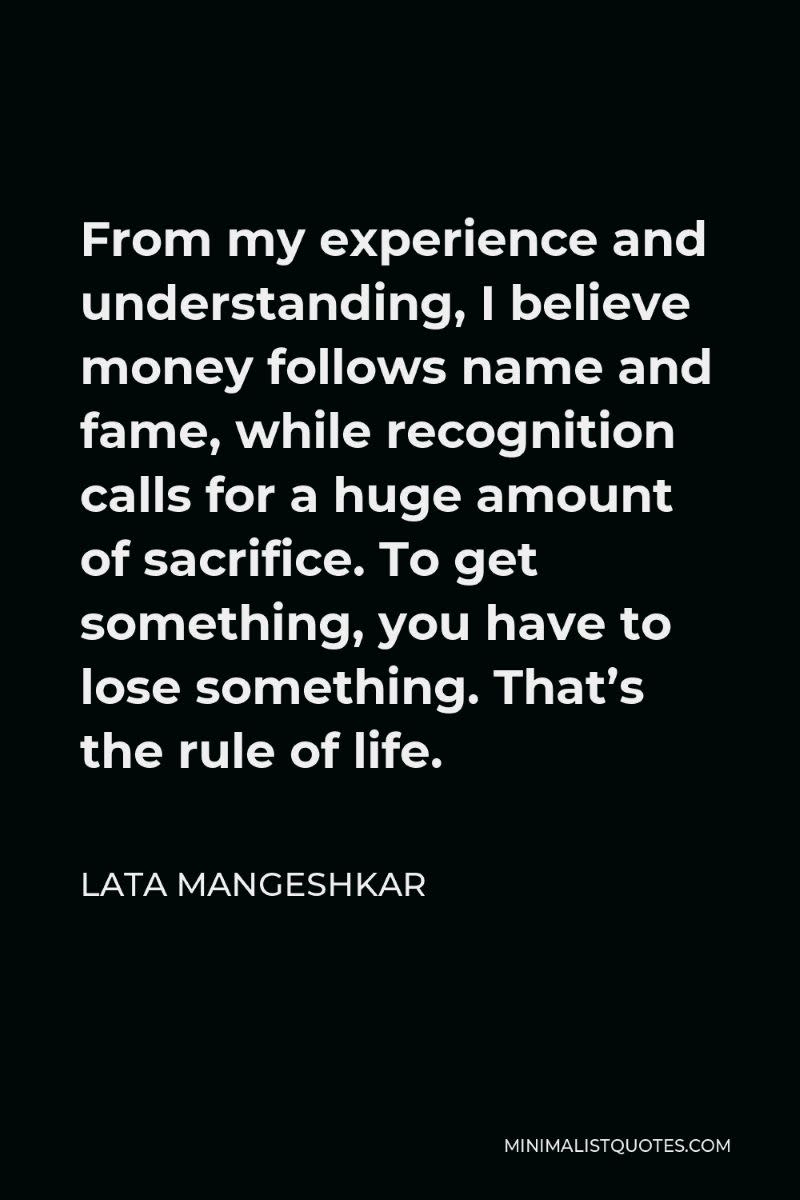
Later on, as I came across many, many who appreciated my hard work, abilities and achievements in different fields, I also came across those who nagged and nagged over my involvement in multiple fields. Ironically, they were the ones who got maximum advantage of my abilities in various fields. Needless to say, they were operating in a "denial mode". They wanted to escape the responsibility of acknowledging good performances and the rewards they rightfully deserved.
The denials were based on all kinds of reasons, most of them targeting or revolving around identity and labels - a lady, a Gujarati, a Lohana (my caste, as a Hindu), an Engineer, a Singer, an Artist, a perfectionist, an idealist .... Whereas there were / are those who are unhappy on my being a Gujarati, there were / are also those who look upon me as a "Lesser Gujarati" ....
The Head of the Department of Vocal Music in the college where I appeared for my Masters Final Examination later met me and urged me to continue with my music, with apologies for being helpless about the cooked up results of my practical examination. She told me that I was denied the deserving result because I am a Gujarati in a Marathi-dominated arena ….
I started finding myself among people who find me lesser or more as one type of identity or label to be included in their domain of inclusivity. The chain reaction of denials continues .... and so does the unfolding of facts and realities of life, realizations and learnings ....
After Lataji passed away, there was a flood of videos of her performances and interviews in social media. In one interview which caught specific attention, she was asked if she would like to be reborn as Lata Mangeshkar and she replied, choked in sadness, that she would not like to be Lata Mangeshkar again. She also had expressed with much humility and emotion in one of her interviews that, her only means of service was her singing ....
Probably, we live in a world that just refuses to feel satisfied and happy. Even the sweetest music appears to be helpless before clamours of complains ravaging sensibility within human minds.
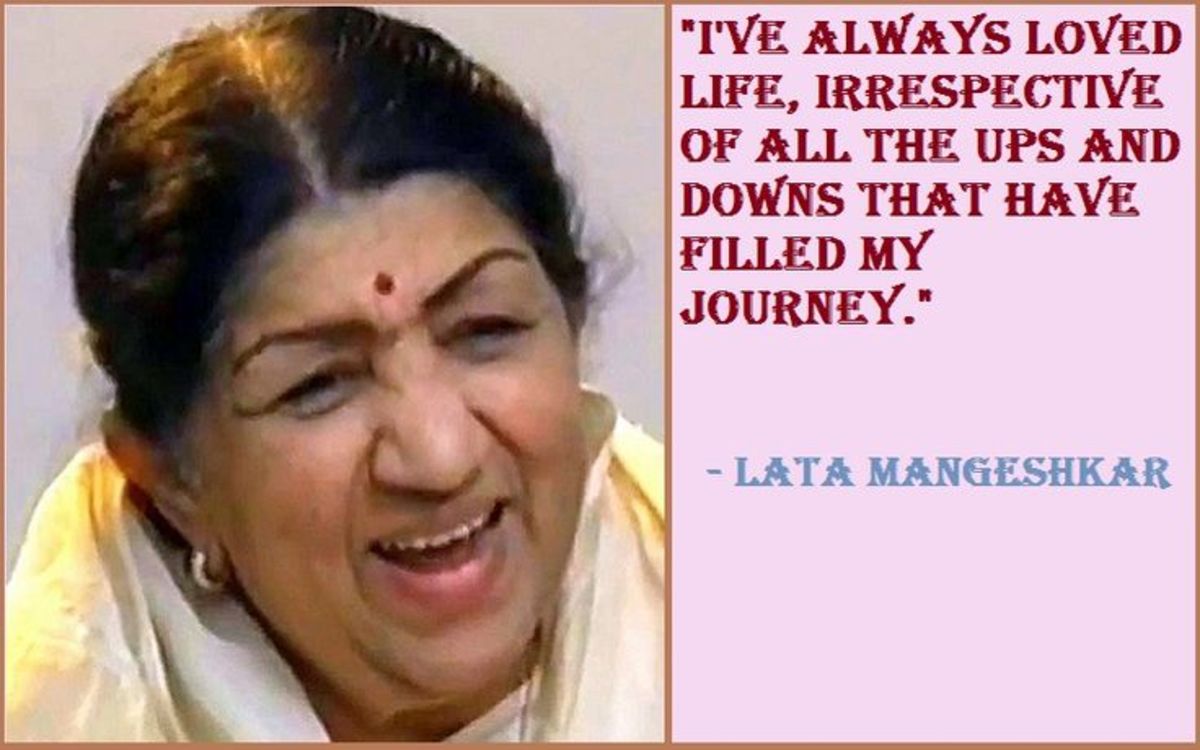
In The Name of Lata Mangeshkar ....
There is no need to speak about admiration towards Lata Mangeshkar and her influence in singing. People can sense it.
I have met several people who have met or known Lataji. Not that I did not want to meet her, but I hardly remember any of them speaking in high terms about her. Even if all the talks about her faults and flaws were true, they had the least possible merit to overshadow her greatness as a singer. The most common complaint was that she did not let the careers of many a singers flourish. Such talks demonstrate the futility of comparisons more than anything else. There is abundant room for excellence. There is vast scope and space for varieties. The mindset of degrading someone to enhance one’s own self or someone else has to be overcome. People have astonishingly high appetite for “Sour Grapes Psychology“ !! There is a saying in Gujarati which conveys that one who is necessitous, doesn’t have a brain.
One of my mentors showed a remarkable eagerness of speaking against Lataji. He would try to inspire me by saying, "You have to go far ahead of Lata Mangeshkar ...." I could never understand what scales of comparison were steering such lines of thoughts and why they were needed ??!! Ironically, he compiled a collection of articles on Lata Mangeshkar and presented it to me. While giving it, again he reminded that I had to go much ahead of Lata Mangeshkar .... Those were his last words to me - in the end of January, 2020. He passed away due to old age during the lockdown. In his compilation of articles, there are several such incidents which describe how Lataji had helped her contemporary singers and artists and how she had struggled for her own rights, rights of women and artists and so on.
On the brighter side of this fact is that, being compared to such a legend is an invaluable complement in itself. I am extremely happy that my singing reminded so many people of none other than the great Lata Mangeshkar herself. I feel truly humbled. Along with the cautions such comments triggered within, they inspired me to be more responsible towards my performances and my dealings.
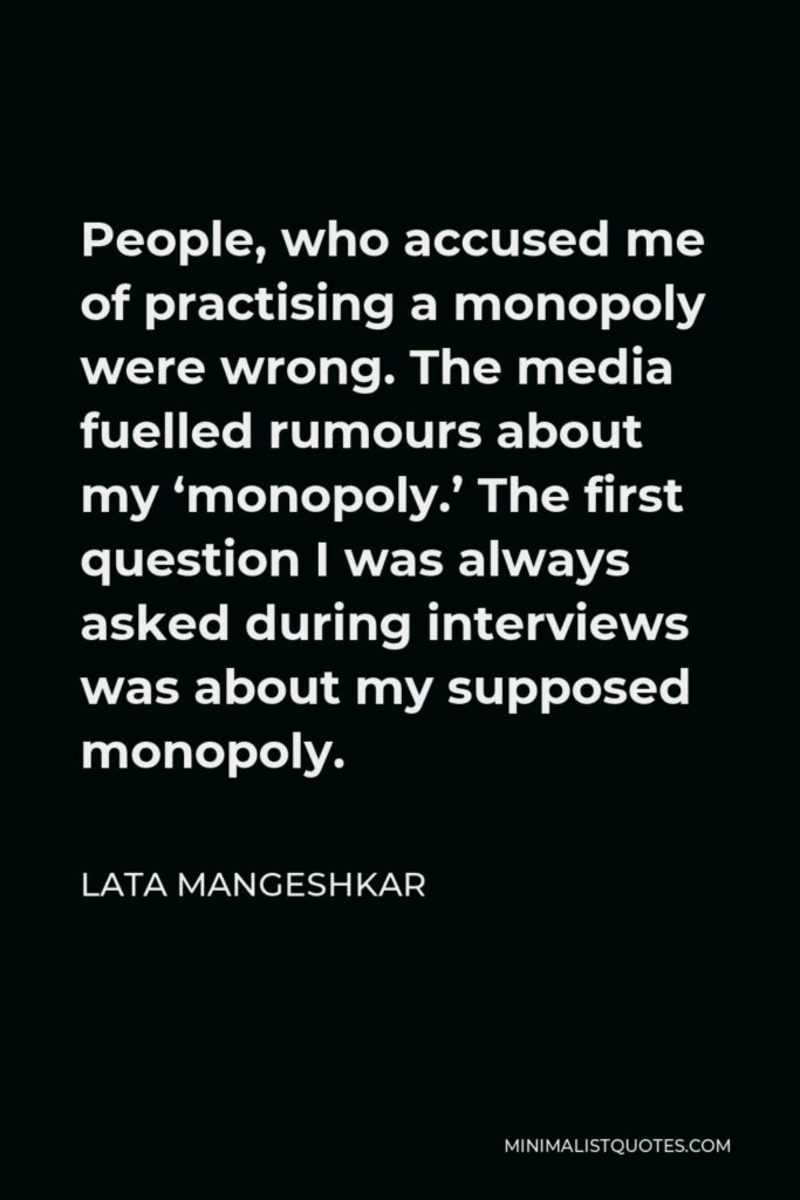
If I sit down to list her songs which I love listening to and singing, it would just go on and on .... I might do that in separate article(s).
Here is a link to a playlist of my recordings of some songs, originally sung by Lataji …. https://youtube.com/playlist?list=PL5F35GY0ll27glLWCfcFJSAupXYZuBbe-
The life and works of a legend like Lata Mangeshkar go far beyond her field of activity in influencing people from all walks of life.
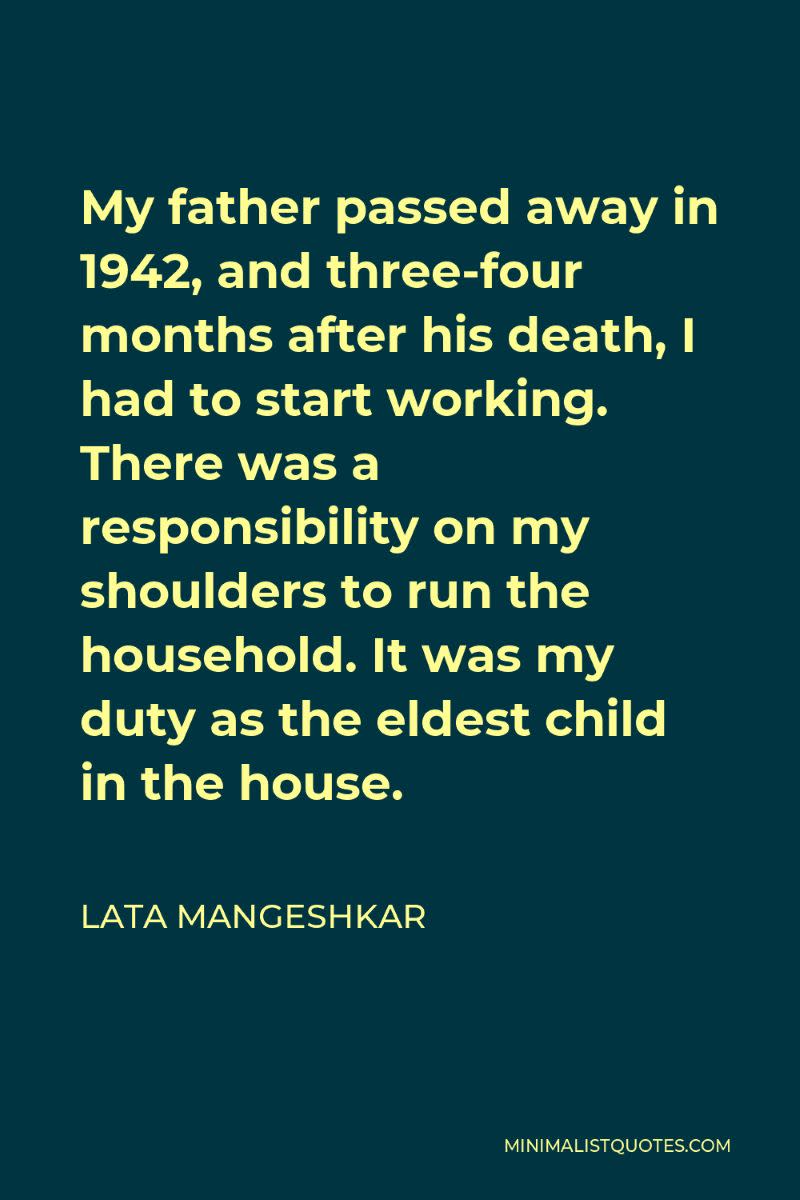
Lataji was deeply devoted to her family. She had supported her family financially through her career in playback singing and helped her mother raise her younger siblings after the passing away of her father when she was merely a teenager.
Lataji had established organizations that serve the field of music and healthcare through commendable initiatives.
I could never meet Lataji ....
The Late Maharaja of Vadodara Shrimant Ranjitsinghji Gaekwad was a great music lover and artist. I was blessed with his generous appreciation and encouragement. I had done quite a few programmes with him and he had graced many programmes and events organized by me with his benign presence.
Every time we met, he would first inquire if my Riyaaz is going on or not.
“Never give up music.” He always told me.
He had told my father that his day begins with listening to my Bhajans from my album - Soor Vandana (released in April, 2008) ….
In the first week of June, 2012, I called him to request his permission for some upcoming event. He told me that he was remembering me. I jested, saying, "Sir, I thought you had forgotten me."
He replied, "Oh, no, no !! I would never forget you. You have to sing in our forthcoming event. I am planning a music programme as a part of centenary celebrations of Maharaja Sayajirao Gaekwad. We are inviting Latadidi ...."
Oh great !! I was so happy !!
As I talked to the Maharaja, I was not aware of the fact that he wasn't keeping well. Nor had I imagined that this was the last time I talked to him. Within a week, the news of his sad demise came along .... The programme he was planning could never materialize. And my dream of meeting Lataji also never materialized.
Though I could never meet her, I very clearly sense her love and blessings in my life.
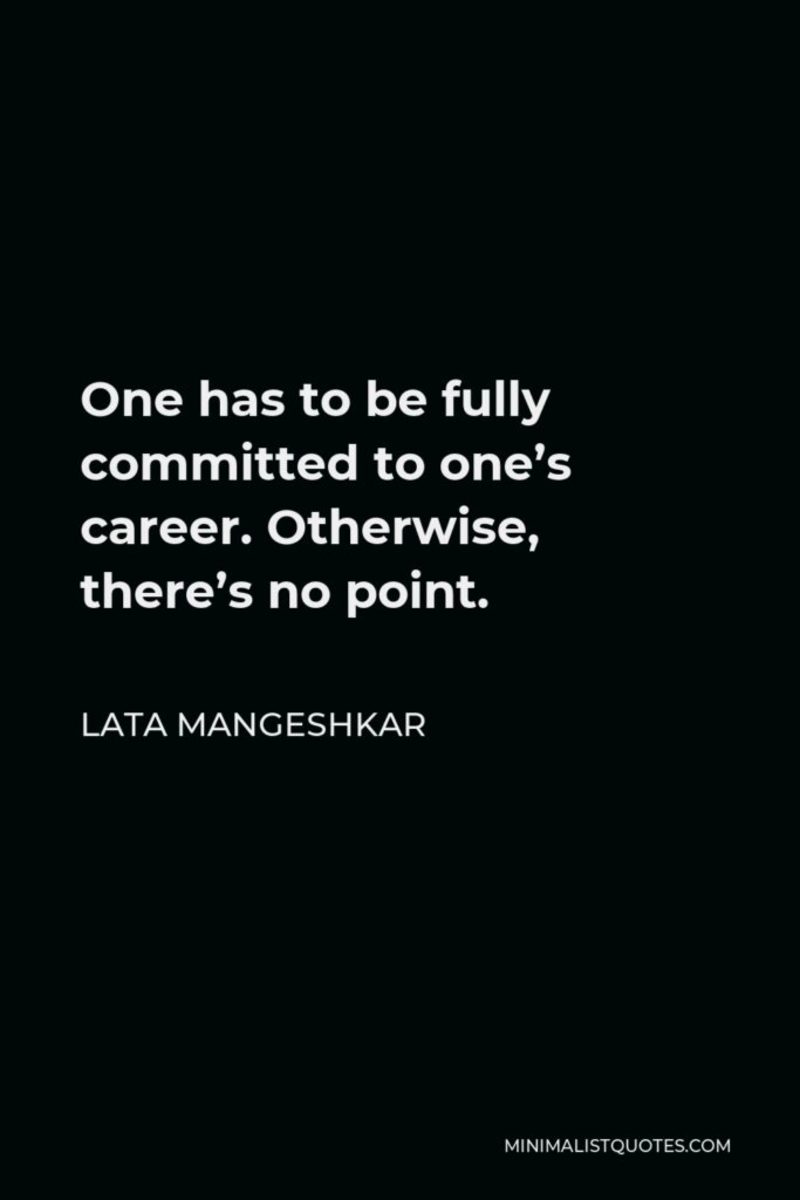
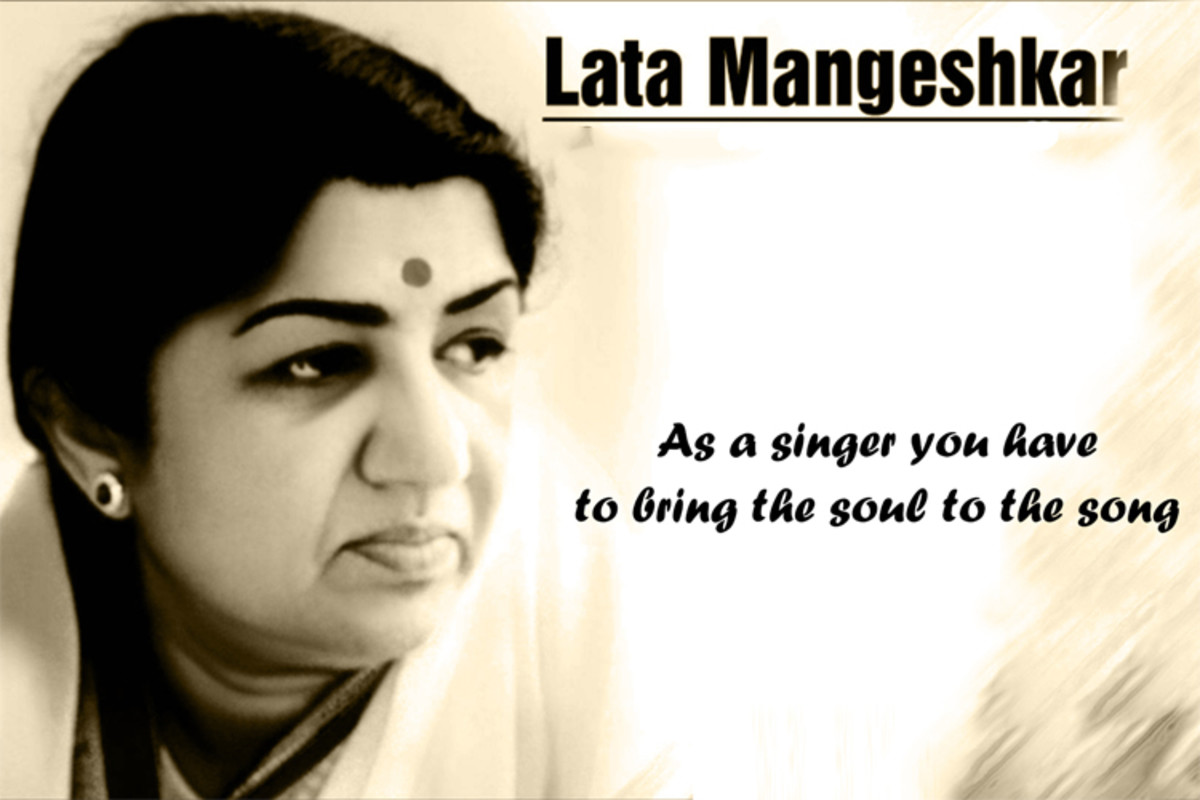
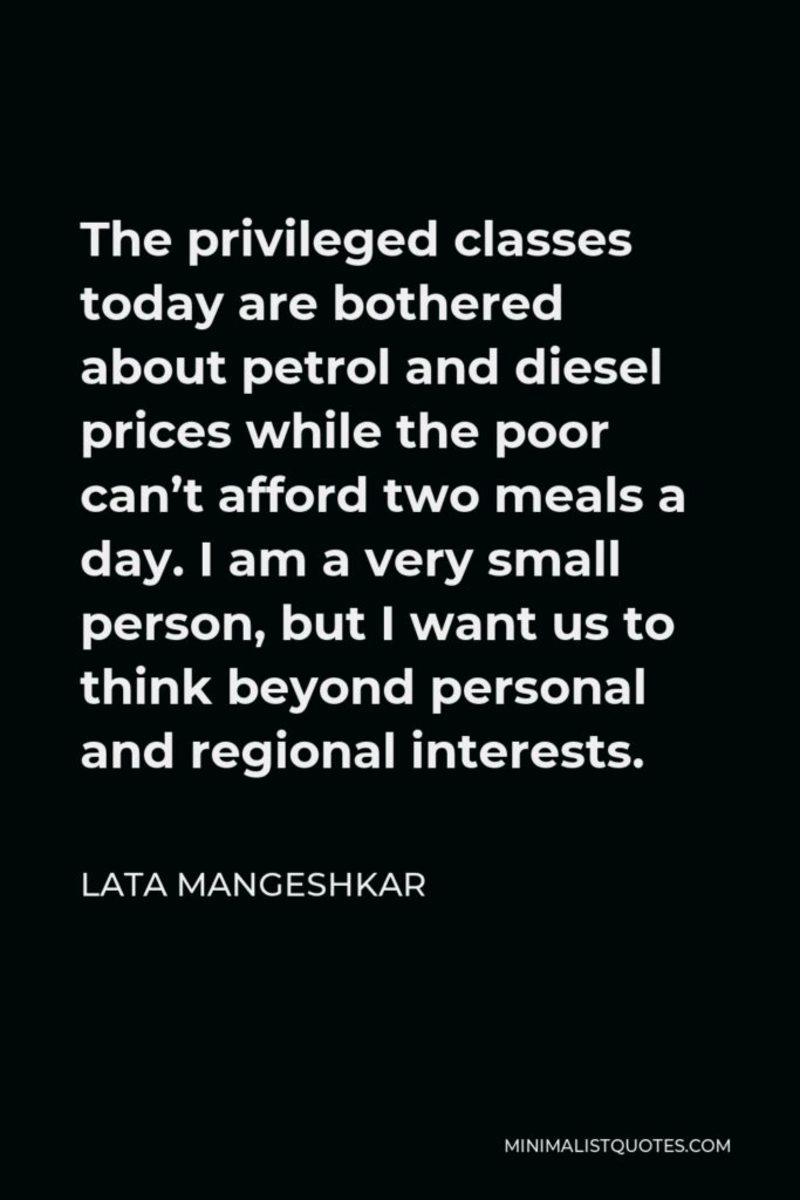
Here are some more quotes from Lata Mangeshkar which speak volumes about her insight and experiences ....


Published first on HubPages on 11th April, 2023